
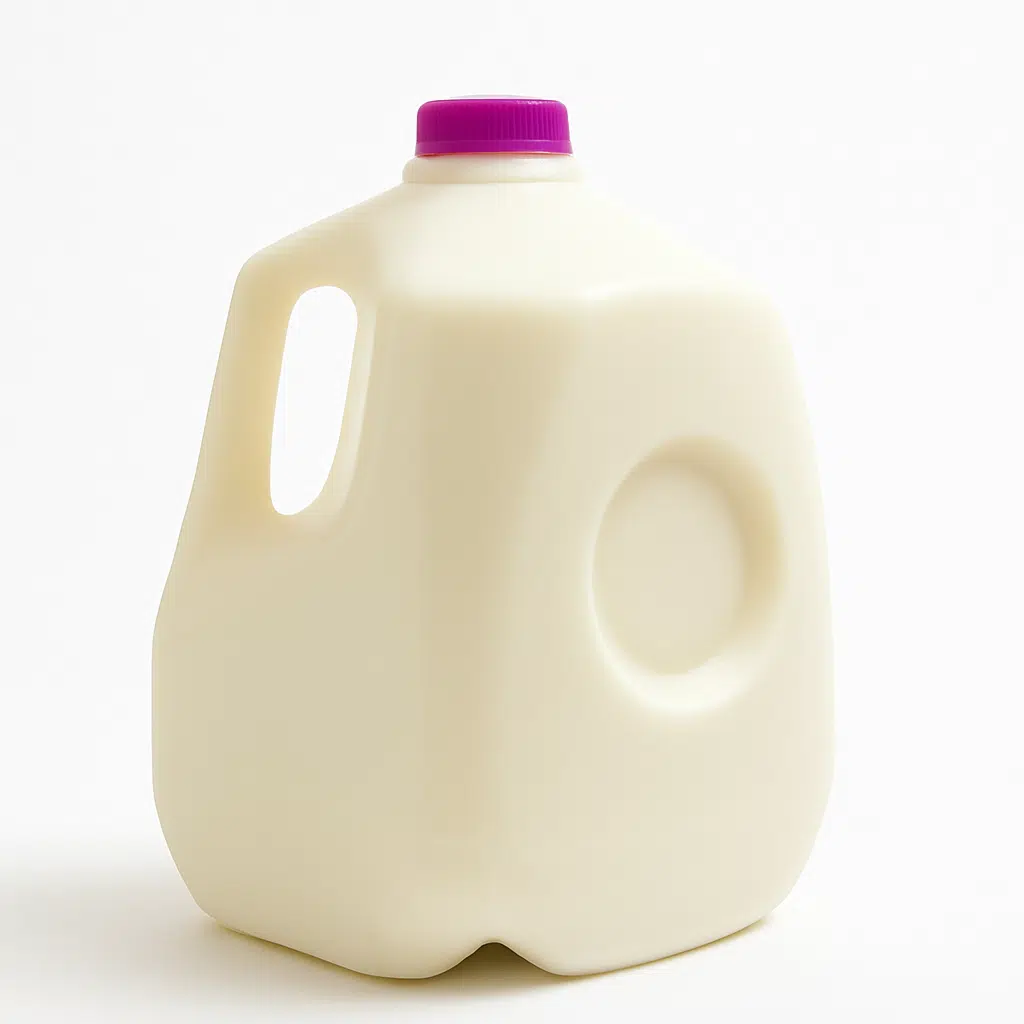
Why Does Your Milk Jug Have a Circular Dent? The Secret Most People Never Learn
Have you ever noticed the strange circular dent on the side of a plastic milk jug and wondered what it’s for? Most people see it every day and never stop to think about it. It might seem like just a design feature, but in reality, that little dent serves a critical purpose that helps protect you and preserve the quality of the milk inside.
In this detailed article, we’ll break down exactly what the circular dent is for, how it works, and why it matters. Once you understand it, you’ll never look at a milk jug the same way again!
1. Built-In Safety: It Prevents Explosions When Milk Spoils
Milk naturally contains bacteria, and when it starts to spoil, it produces gases like carbon dioxide. These gases can build up pressure inside the jug. That’s where the circular dent—also called a “flexible expansion panel”—comes in.
- It allows the jug to expand outward instead of bursting.
- It’s a safety mechanism that protects both the container and the consumer.
- If the dent is bulging outward, it’s a warning sign that the milk might be spoiled.
This feature acts like a pressure release valve. It’s a subtle but effective way to show whether your milk is still safe to consume.
2. Structural Support During Shipping and Stacking
Milk jugs are often stacked and transported in bulk. The circular indent adds strength and stability to the jug’s shape.
- It absorbs pressure from stacking and handling.
- It helps prevent the jug from cracking or collapsing.
- It keeps the milk safely sealed even when under pressure during shipping.
This small design tweak helps grocery stores and suppliers minimize waste and damage.
3. Better Temperature Regulation
The dent isn’t just about pressure and structure—it also helps regulate temperature.
- The shape allows for more even cooling inside the jug.
- It prevents hot spots that could accelerate spoilage.
- It ensures that the milk stays cold and fresh for longer.
For households and large retailers alike, keeping milk fresh longer means fewer problems and happier customers.
4. A Step Toward Smart Packaging?
Some brands are now exploring packaging technology that uses this dent for more than just structure.
- In the future, the dent may change shape or color depending on pressure or spoilage.
- It could become a built-in freshness indicator.
- Researchers are even looking into materials that can signal changes in milk composition.
You might one day be able to tell if your milk is safe just by looking at the dent.
So What Should You Do as a Consumer?
Here’s how you can use this knowledge every time you pick up a jug of milk:
- Check the dent. If it’s popped out, the milk might be spoiled.
- If the jug looks swollen, don’t drink it.
- Treat the dent as a visual freshness test.
It’s a small detail, but it could help you avoid drinking spoiled milk and risking food poisoning.
Fun Fact: Not Just for Milk!
This design feature isn’t exclusive to milk jugs. You’ll also find it in:
- Large juice containers
- Vegetable oil bottles
- Some water jugs exposed to high temperatures
The principle is the same—pressure management and safety.
Conclusion
That little dent on the side of your milk jug isn’t just a quirky design. It’s a brilliant engineering feature that:
- Protects you from bursting containers
- Helps maintain product quality
- Reduces waste during storage and transport
Now that you know its purpose, you’ll start noticing this clever feature everywhere. So the next time you grab a jug of milk, take a second to check the dent—it might tell you more than you think.